
Hidden Children
A few days ago I accompanied Bogdan Zuyakov and Ben Kochenburger on one more evacuation trip to Druzhkivka, where we found something (unfortunately not really) unexpected.

According to official figures released on 29 April, a total of eight children are still living in the parts of Donetsk oblast that are controlled by Ukraine but designated as active combat zones. Two of them are in the city of Druzhkivka, where mandatory evacuation of families was announced in August 2025.
If that figure sounds suspiciously low, it is. Authorities and the media can only report the official statistics but everyone knows there are hundreds of children remaining in some of the most dangerous places, hidden by their families. Sometimes those families are zhduns – ‘ waiting’ hopefully for Russian occupation – but others stay for reasons that are as individual as the family.
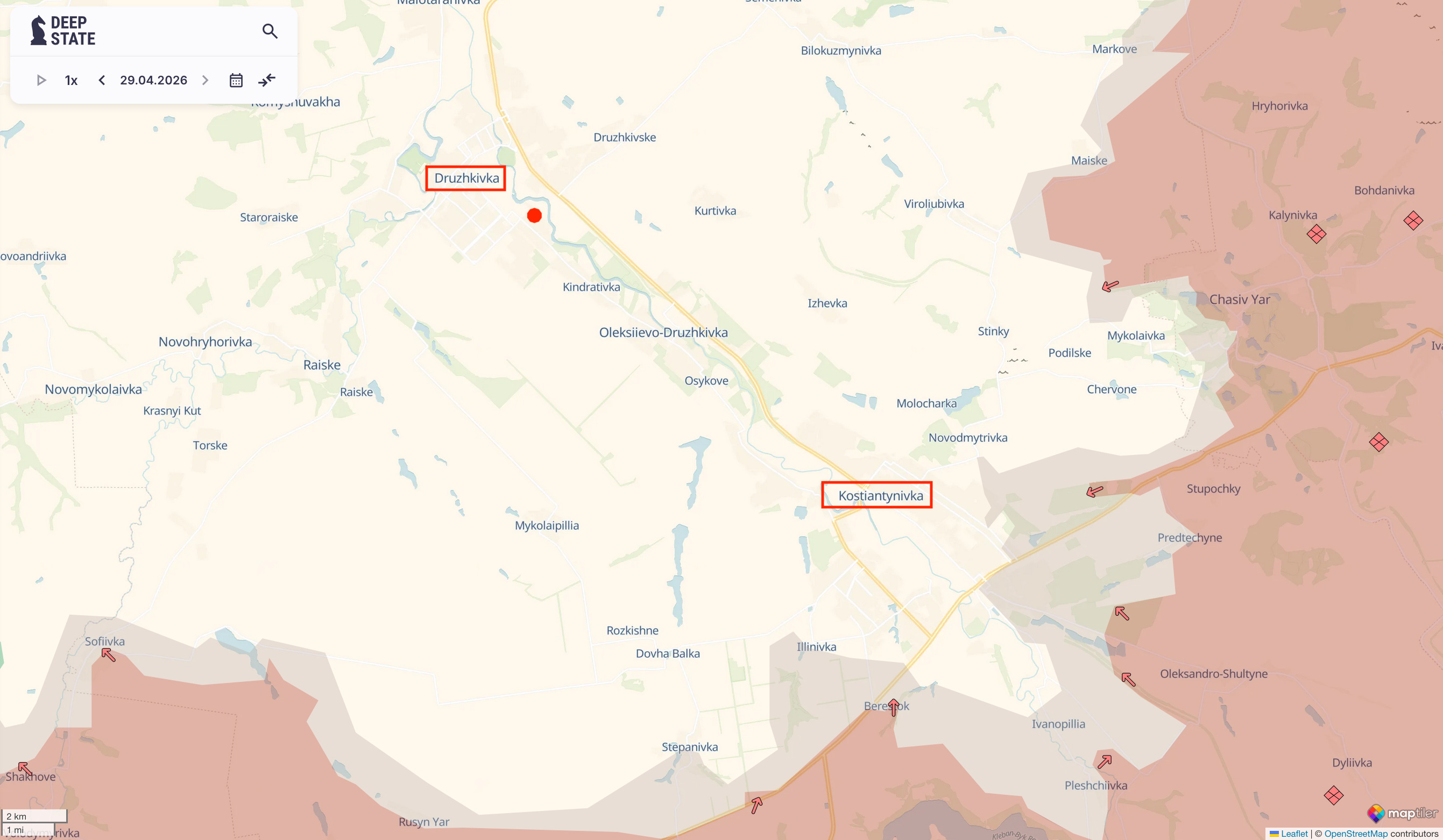
This evacuation was uneventful in most respects. We roared into what Bogdan calmly announced was ‘the most dangerous part’ of Druzhkivka, Toretskyi (shown as a dot on the map), and parked outside a house, leaving the van – actually an ambulance – doors open and the engine running for quick departure.
Pretty much every evac near the front lines starts in the same way. Banging on a gate or door, yelling ‘HOUSEHOLDER?’ and hoping for the best. Sometimes nobody comes: they’ve reconsidered their call to the evacuation hotline or just, well, who knows. Fortunately that didn’t happen this time. A grey-haired man came out and spoke to Bogdan for a few moments.
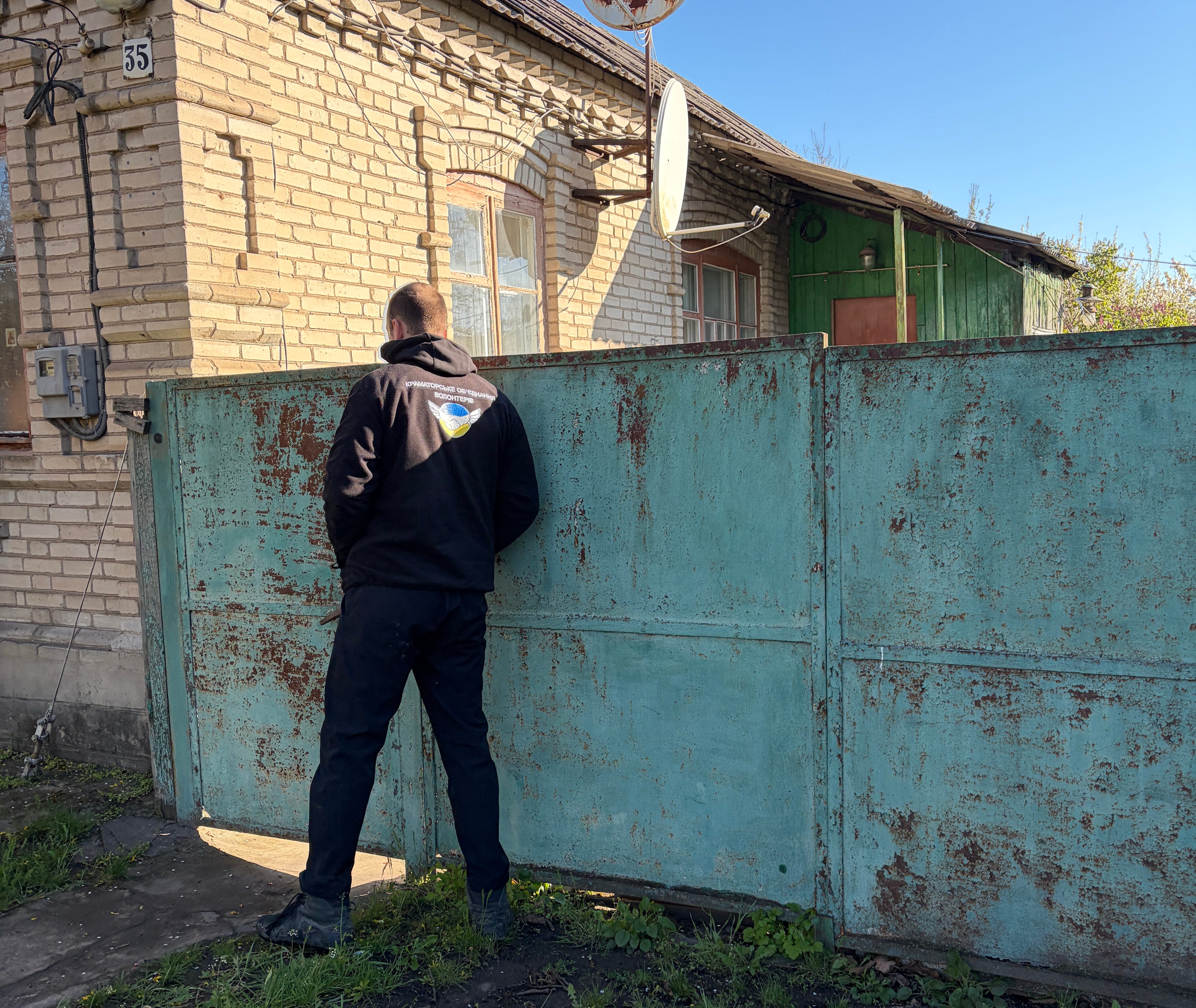
You might have noticed that Bogdan is not wearing his armour. That is because I am wearing his armour. That is because Bogdan forgot to bring the spare out with him. You forget your lunch when you head out for work sometimes. Bogdan… Well. I was worried that I would be reporting that he’d died a hero because he’d given his body armour to the dumb foreigner but at least we were spared that.
Instead, the householder went back inside. There was a moment of drama as an FPV flew overhead, but it was one of ours. Then a couple of soldiers came strolling along the road and addressed Ben, which wasn’t the best choice as his Ukrainian and Russian are limited, but he is well able to say ‘Trump Khylo” – which best translates as “Trump is an asshole” – which they accepted as a reasonable greeting.
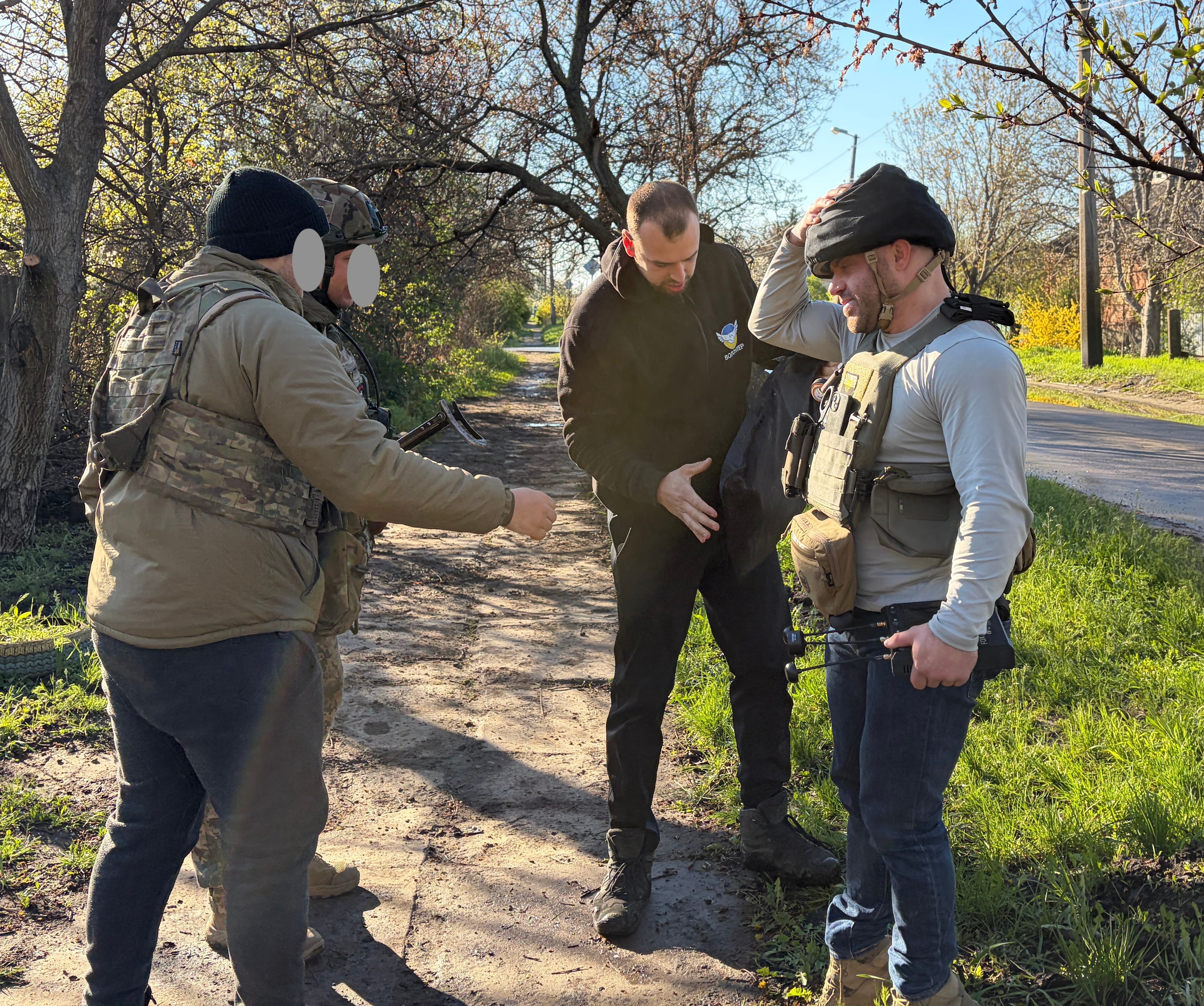
And then the soldiers ‘closed the sky’ for us, a Ukrainian term which in this case means the soldiers stood or crouched with rifles at the ready to shoot down drones while Bogdan and Ben helped the family into the ambulance. The family turned out to consist of parents – and this little guy.
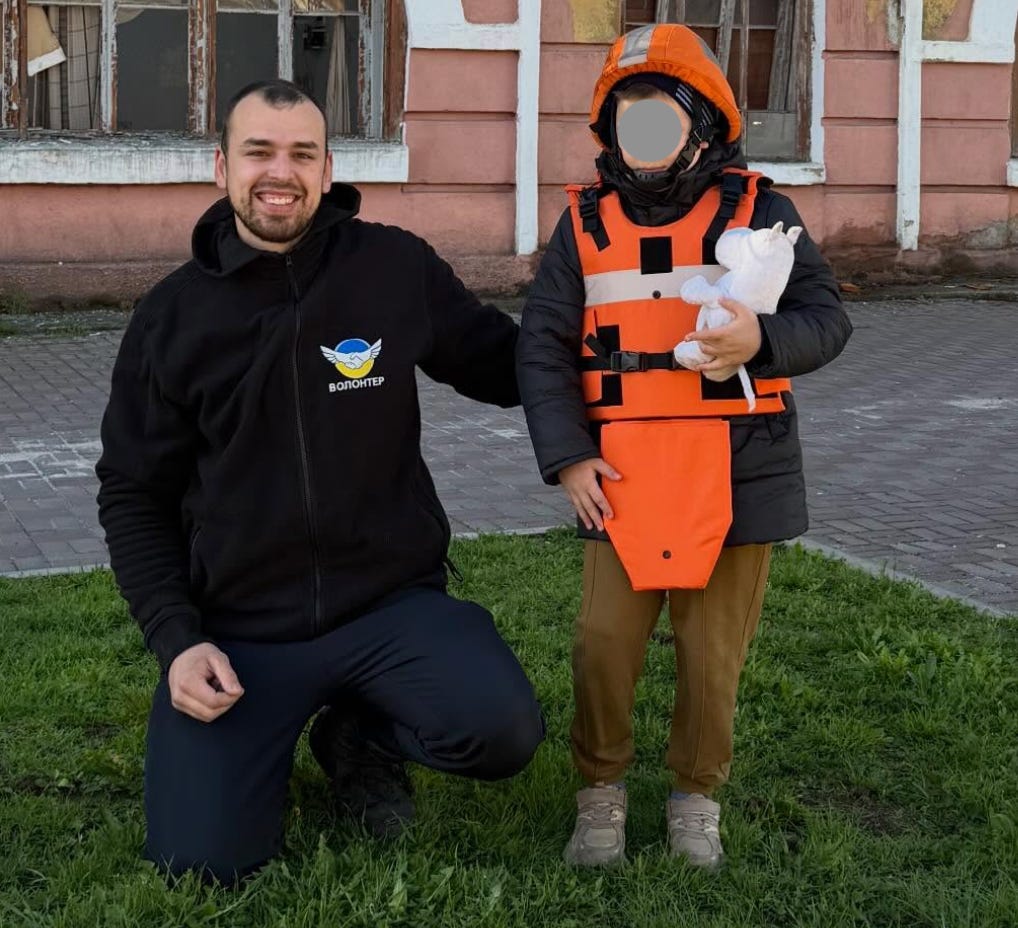
He’s ten, but he doesn’t look it. Whenever possible he clutched his plush Moomin, mostly staring at the ground, and only moved when prompted.
Children secluded for years because of lockdowns, then schooled online if at all during the first years of the full-scale invasion, and now hidden entirely from the compulsory evacuation, are almost inevitably subject to significant developmental delay. The boy stood there passively, while Bogdan helped him into the set of children’s body armour that he always carries.


Once the family were loaded into the ambulance, we drove back to Kramatorsk without incident, but Bogdan was pensive ‘I didn’t know there was going to be a child. I was just told, “Four people”. I’d have made sure to prepare better if I’d known.”
At the drop-off point in Kramatorsk, Bogdan had to fill in some extra paperwork, since the police need to know when he finds an unregistered child, who they may be searching for. The moral imperative to evacuate children from cities under intense shelling is clear – but can you imagine going up to parents and physically dragging their screaming child away from them, as would be necessary in some cases? And when that does happen, the authorities sometimes find themselves accused of ‘genocide’, as that term is used for the forcible deportation of Ukrainian children to Russia. It’s hardly the same thing but there are people who will say it is.
Well, as of that morning one more kid was out of the most dangerous areas, thanks to Bogdan and Ben.
Bogdan’s team continue to go out on evacuations almost every day. In mid-April, an evacuation vehicle belonging to the Подих Надії (Breath of Hope) group was targeted. A Russian drone went right through the logo on the bonnet of the car.
Bogdan: “What are the Russians in Druzhkivka doing? This is what. A volunteer vehicle was attacked today. Thank God the hit landed directly on the bonnet. The only thing that helped was that it had armour.
People were heading out on an evacuation, trying to save people, but the Russians don’t even allow that. They destroy every vehicle. So please, evacuate now. It’s past time. This is just messed up.”
Bogdan videos himself for Instagram and Facebook most days, and it’s not for our benefit. It’s to persuade his fellow Ukrainians in the most dangerous locations to evacuate before it’s too late.
There are fewer and fewer evacuators operating along the eastern front, as it gets more and more dangerous. Ukrainians in their native regions, sometimes with foreigners on-team, sometimes without, are the most dedicated. You might remember that the previous evacuation I covered involved transporting a frail elderly man in a well-armoured but almost completely bare former bank van. The vehicle used today was more suitable to the task and its dangers: an armoured ambulance, belonging to the French NGO U-Saved.


However, this vehicle is only borrowed. And due to the state of the roads in Donetsk oblast, it’s usual for evacuation vehicles to spend half their time being repaired, so really Bogdan’s team needs two vehicles to run one service. Bogdan: ‘Our biggest need is an armoured vehicle that’s really suitable for evacuations. Ideally, an armoured ambulance. We temporarily have the U-Saved one, but it’s not actually ours.”
Do you have a spare armoured ambulance in your back pocket? Maybe, maybe not. But equally importantly, Ben has an ongoing fundraiser for fuel and repairs to keep the team on the road.
The child was evidently in full freeze mode. Not a bad instinctual choice for someone who knows they have no agency in the situation, and feels in the power of possibly ill-intentioned strangers. Even in the best case, however, these experiences carry consequences, all the more so when the adult caretakers have not taken care to explain the situation and the possible outcomes, including relocation. When on top of that the adults fight the children's evacuation... it's heartbreaking.
I wonder about the zhduns: as far as you know, does actual collaboration with the enemy take place? or do they limit themselves to waiting?
Thanks for sharing this Anna. Exceedingly important work. Donated and shared 👍