
Just Keep Moving
Few in the West realise just how absurdly hard it is for Ukrainians to perform their seemingly routine miracles. Community centre Dobriy Rukh is on the brink of closure due to a rapacious landlord...

Five months ago, the Swedish group Operation Change introduced me to Valeria of Dobriy Rukh (the Good Movement). They are an amazing grassroots organisation helping the neediest people in and around the city of Kramatorsk: mostly the elderly, who are trying to live on the state pension of 2,000 hryvnia (£36/US$50) a month, and Internally Displaced People with children. Their existence was somewhat tenuous: a centrally located but tiny room piled high with donations… And in the past couple of weeks, at risk of weighting this journal with bad news (a first, I know), it’s got worse…
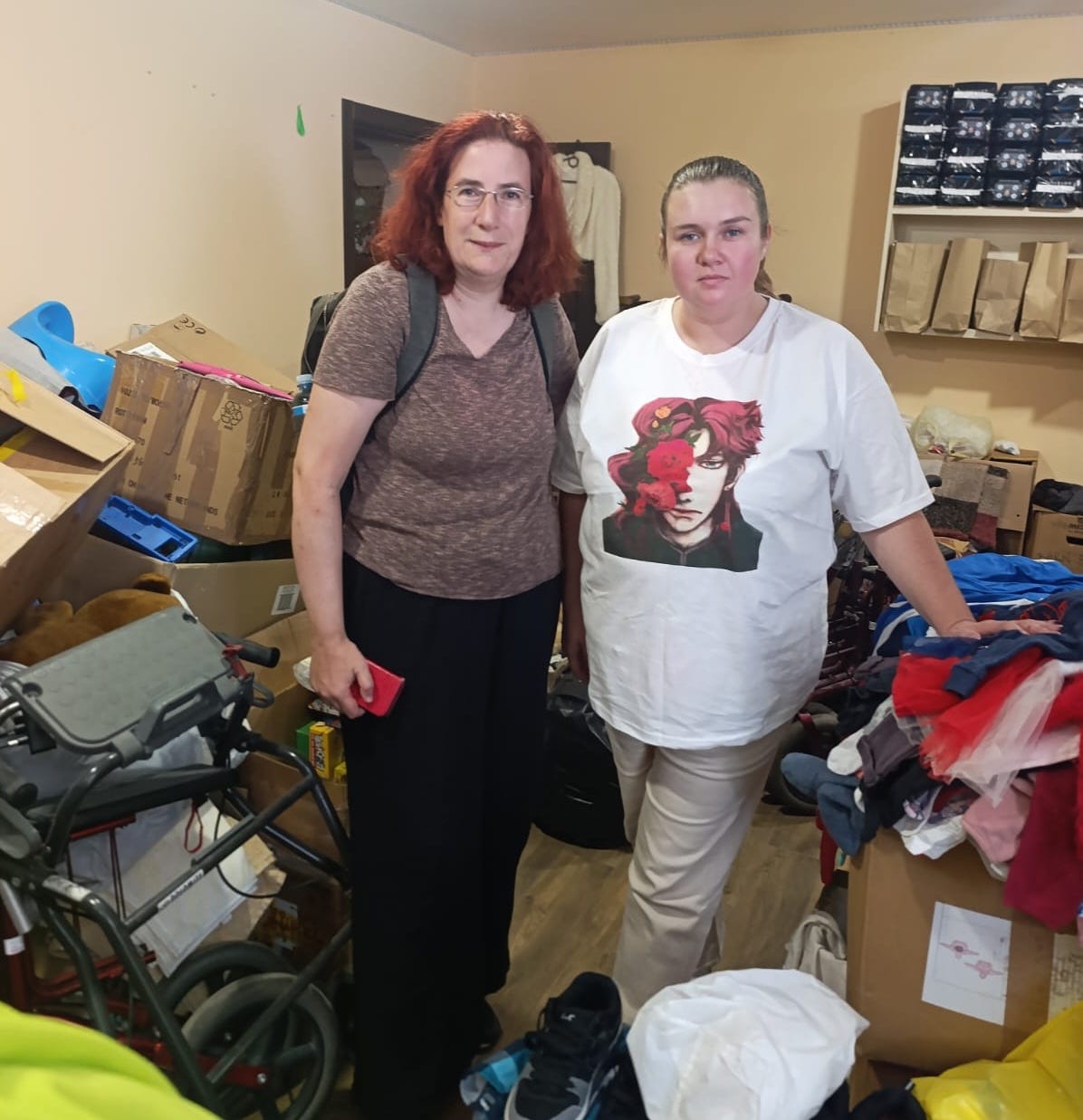
So I messaged you about meeting up the other day, and the headline news is that you’re being kicked out of your premises because the landlord is renting it to a business!
Valeria: Yes. At first, when we came here, we were paying 4,000 hryvnia a month (£71/US$97), not including utilities. Then [the landlord] said to pay 6,000 (£107/US$145) but we agreed on 5,000 (£90/US$121) And now he wants 15,000 (£269/US$362) a month. That’s an impossible sum, an unreal sum for us. So we need to find somewhere new. But the ones we can afford are either unsuitable because they’re too small, or there are no toilets or water.
Are there any buildings in Kramatorsk you can get for free?
Nobody wants to give us anything for free. We’re constantly writing in all the [Telegram and WhatsApp] chats in the city saying that we need help, we need a free room, please give it to us. But, sadly, the only place we’ve been offered for free has no heating. The electricity bill there would cost a fortune. We’re very grateful to the owner for offering it to us free, but unfortunately we can’t afford the utility bills. The bill for electricity for heating alone would be astronomical.
We’ve applied for our first grant, but because the head of our fund – I’m acting head – is studying abroad, we won’t manage to get all the documents together in the required time, so unfortunately we’ve had to decline the grant. Now he’s coming back, and we understand which documents we’ll need to prepare next time, we’ll know what to expect. But the organisation approved us for the first one, we managed it, so hopefully that means we’ll be approved for more. So that makes us a little positive, but the situation we’re in now is scary. We have to leave our current premises on the third of October.
What will you do?
The fund will temporarily stop operating while we don’t have premises. Or maybe we’ll hold a distribution once or twice a week from the other place we have. It’s not really suitable, though. It’s good for doctors to come to and see people: there’s small rooms. But that’s why it doesn’t suit [our other work]. So we’re searching.
How are things otherwise?
Everything’s been as usual, except that the front line is getting closer and closer. So there are new problems with distribution, for example a few times we’ve had to pause the distribution because the city was being shelled. Drones are already flying around. We have to stop the delivery and ask people to leave the street and go home, or to a shelter.
How are donations going?
At the moment the number of donors is decreasing significantly. Everyone’s operating on grants. Organising projects. There is significantly less distribution of humanitarian aid. On the one hand, that’s bad, obviously. But on the other, these are projects for people who need help. Bedridden people, who are completely alone, all their relatives have left. They’re not leaving, they’d rather die in their own homes.
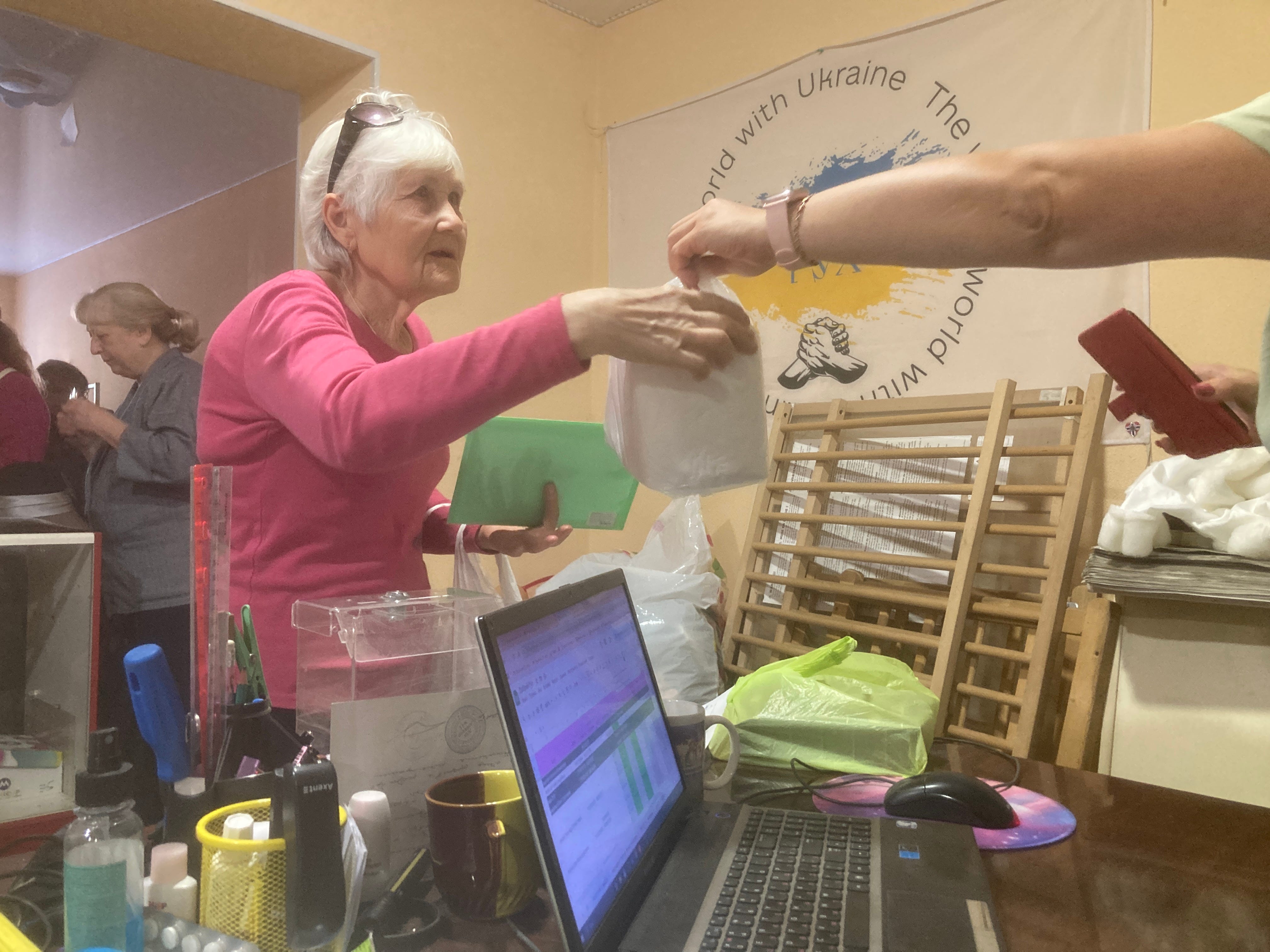
Later I asked that same question of the volunteer on the front desk that day, another Valeria.
Front desk Valeria: There used to be a lot more humanitarian aid. Now everyone has switched to grants for project work. It’s understandable but there are people who need humanitarian aid, not projects.
I prefer to give them specific help, not money. Social security has a lot of families with children and sick people on their books. We can’t give them money. It won’t go to the children. But we can give them child formula and nappies, and you know the child will get it.
At one point we collected money and bought food for a hundred people aged 80+. Out of all those hundred elderly people we visited and gave food to, only five were living in decent conditions. The others had been pushed out to sheds or summer kitchens.
But by giving them this kind of help we know it will benefit them. It won’t go to some drug addict son. So financial support is good, but in my opinion it’s better to give humanitarian aid. We know exactly where it goes.
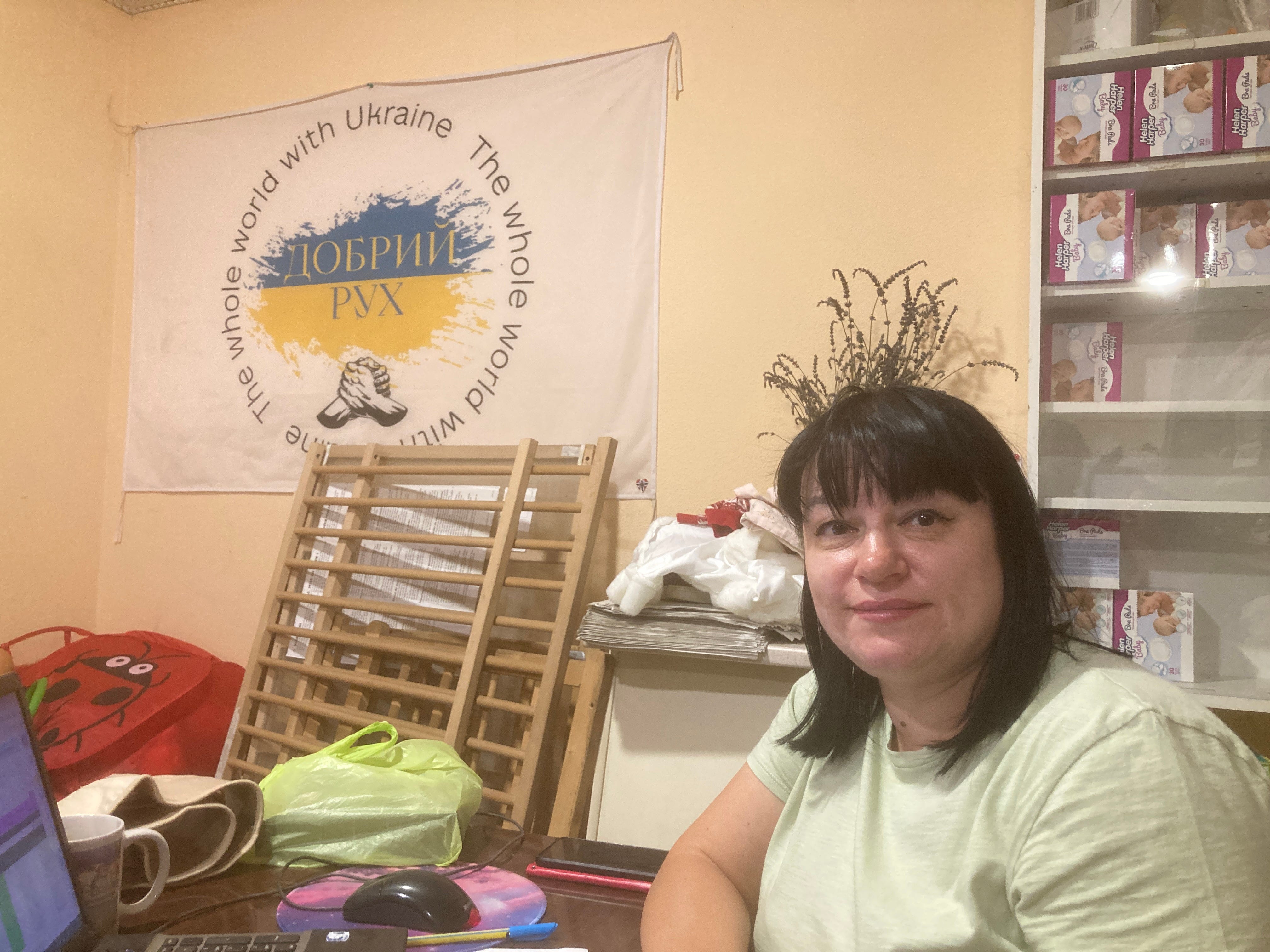
Does the city administration support you?
Director Valeria: No, we don’t ask them for help. It’s an unpleasant situation, but… At the start of 2022, we worked with the organisation Heks Eper. But Heks Eper left us to work with the city, they don’t work with us any more. They brought big lorries with adult nappies, construction materials. When there was the attack on Marat 13 [an apartment block] in February 2023, all the journalists, the whole town saw the situation when the authorities just turned up, took photographs and went away. We repaired everything with material Heks Eper brought. Our volunteers helped them do it.
The city authorities are very corrupt. They plant flowers, green up the city… I understand, but no.
How can foreigners help?
We would like to find a person or a group of people who could take responsibility for the rent of our premises. Because we collect money for the rent from people who come to us. They give 10 or 20 hryvnia (£0.18/US$0.24 or £0.36/$0.48) each. We collect a certain amount each month. Our volunteers all work and volunteer at our office when they have time off . Or if they don’t have time off, they contribute to the rent. So they all donate their salaries to rent the office.
If someone could come and say we are going to pay for the rent, for utilities, that would be absolutely wonderful. To draw up some kind of agreement.
If there are donors willing to help us on a regular basis, or even from time to time, they can help with nappies for children or baby formula. It’s getting cold, so we need nappies for older children, size 5 and 6. Not for the smallest children; we have a good supply of those, thank God. But children who are a bit older are still growing up at home and the heating isn’t on yet [heating in Ukrainian apartments is centrally controlled, and turned on citywide at a set time of year]. They need nappies.
Do you have a PayPal?
I tried to register PayPal here, but for some reason they think we are in Russia. It’s a big problem. However, we have a volunteer in Kyiv and he has PayPal: ruslan.rus7500@gmail.com
Ladies and gentlemen, this post is not very cheerful overall, but the discovery of any reliable means of channelling funds to grassroots organisations in Donetsk Oblast is a victory! We can provide some bona fides for Ruslan if anyone is concerned.
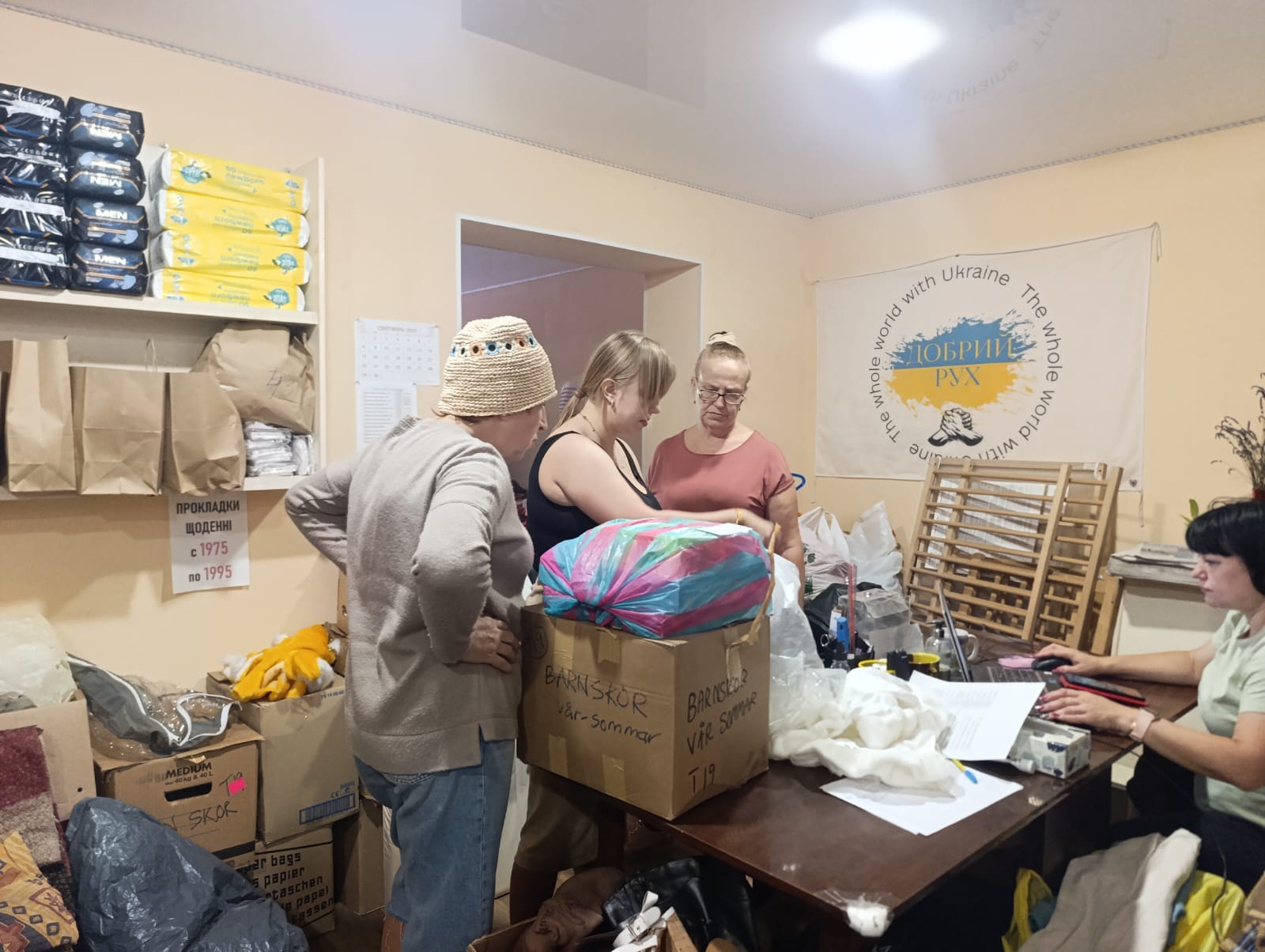
I see the ‘WE HAVE NO ADULT NAPPIES’ sign is on the door again…
Director Valeria: Oh, right now, we have adult nappies! Operation Change gave them to us. They know we always need them.
Front Desk Valeria: But the sign stays there. Otherwise people come in and ask us all the time. When we have nappies we write in our Telegram that we have S, M, L size, whatever. And people come running. Just running.
I guess some people want to sell the nappies on.
Oksana, volunteer: Yes, sadly a lot of people lie. They used to sell them on at the market. That’s why we divide the packs up [into batches of 10 individual nappies]. People won’t buy divided packs. Before that, we were seeing them on sale at the market half price.


With the help of friends and subscribers, I’ve been able to personally supply DR with £1,000 worth of adult nappies over the past few months (by buying them online for Valeria to collect from a local branch of the shop Rozetka). Other donors have also contributed nappies, but there’s no long-term commitment at present.
Director Valeria: We’re very grateful for the help you’ve given us. The amount of nappies you’ve given us means a lot. It makes a lot of impact because we know who needs them. People received them. And they were very happy that they had support for a while. We know this doesn’t cover all their needs. Nobody should cover all people’s needs. But it gave them time. Time is our most valuable resource.
It’s also very important for people to understand that they’re not alone, that they are not abandoned, that they have a place to get help. It’s important for their morale.
Is the overall situation getting worse in Kramatorsk?
Director Valeria: Yes, but we have faith. We hope. We believe in the army, we know that this is Kramatorsk [laughs]. This is the heart of Donestk Oblast [county]. Of course I don’t want to believe that anything could happen to Kramatorsk and Sloviansk. We believe in our soldiers, because we know they are building defences. They are working and striving. We know how many guys are dying, giving their lives.
We don’t believe it can be that easy [for the Russians]. They can’t just come here and take the place. They can’t be let in. But, yes, they’re not too far away, and they won’t just leave us be.
They’re advancing with their FPV drones, lobbing their guided bombs at us. But they won’t get here. They won’t take us. We strongly believe that. We don’t just hope, we believe.
Drones are getting smarter and smarter.
That's why I'm thinking about taking the ‘VOLUNTEER’ sign off my car. Because that’s like a red rag to them.
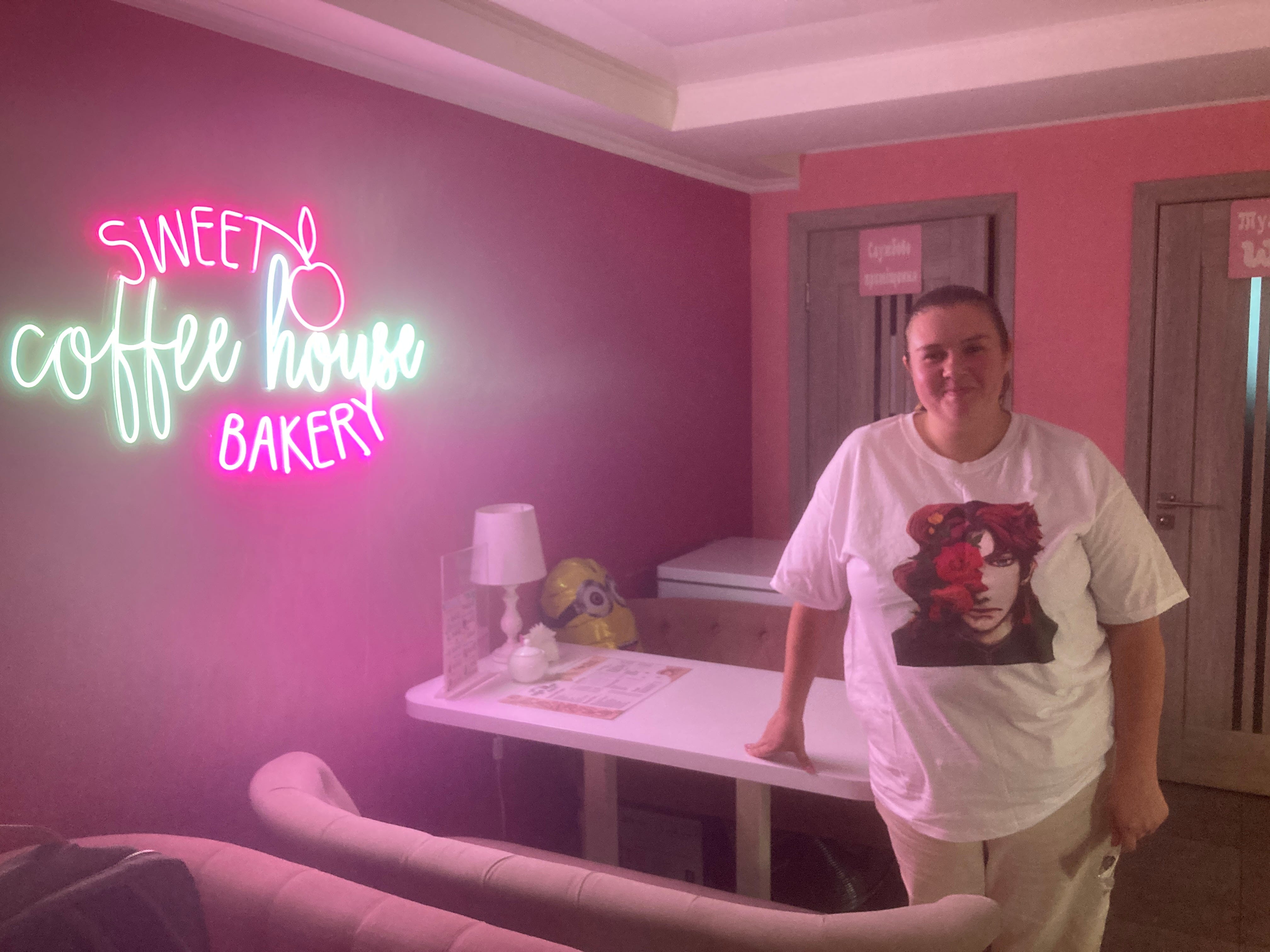
If it becomes too dangerous to live here, where will Dobriy Rukh go?
We will move if it becomes too dangerous here, or if that’s going to happen. I moved to Kamenskoye because a lot of people from Donetsk oblast moved there. There are people from Mariupol and Bakhmut. I’ve got to know then and of course I really want to help people from Donetsk oblast in that town. Well, not only people from Donetsk. I’m actively thinking about it now.
The problem is that to solve the issues there, I need to solve the issues here! I can't do everything at the same time. And this is very difficult.
So right now we’re trying to solve the issue with the office so our fund can continue to operate here, to help people here. Because I know very well that too many people get help from us. Even the city authorities, who help people, their staff send everyone to us, because they know we can help. When people are in trouble, when their homes are hit [by drones or missiles], we immediately say, come to us, we’ll help in whatever way we can. We have pillows, blankets, clothes, shoes.
But I think our local authorities will wake up a little and start protecting our city, put in some kind of air defence system. Introduce protections from drones. The systems already exist, we just have to get hold of them.
We want to survive [laughs]. Our foundation wants to survive. We want to continue helping people. We like what we do. It is also an anti-stress mechanism for us. It’s how we fight our own problems.
All the girls are volunteers. They all want to help our city to survive. It gives life to many people. The women of our foundation cannot take up arms and defend the country, for a number of reasons. But we can help this way.
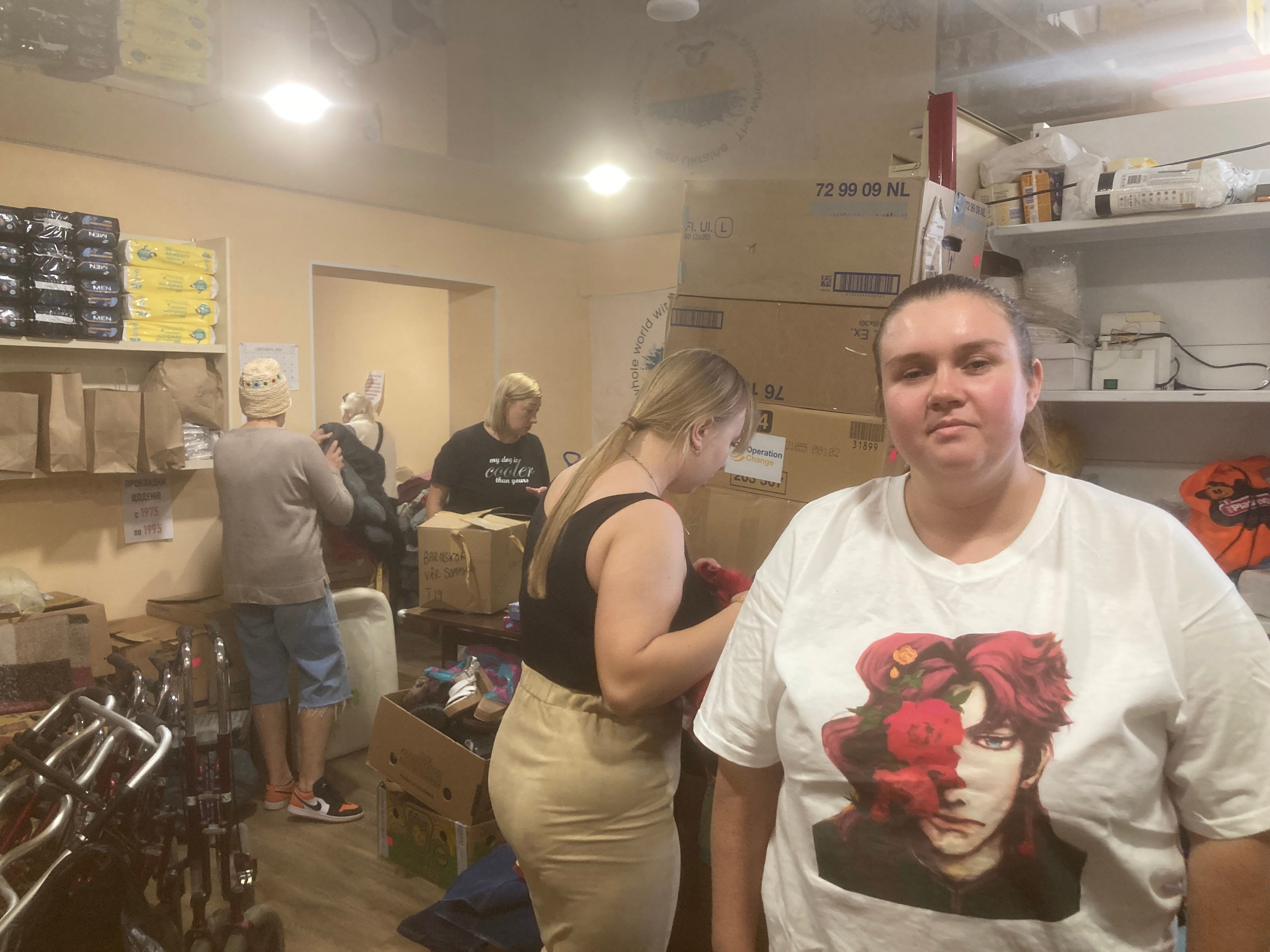
Greed finds its slimy way even into the warm solidarity and can-do attitude of the Ukrainians... =(